Post-gastric sleeve surgery can cause an uncomfortable sensation after just a few extra bites. Your stomach is much smaller, especially in the early recovery days. So, What Happens If You Eat Too Much After Gastric Sleeve Surgery?
While people preparing for bariatric surgery Turkey quickly look for information about the procedure itself, discovering how to experience the signals of fullness after surgery is vital as well. Here is how overeating might feel, what you can do immediately, and when medical help is necessary.
What Happens If You Eat Too Much After Gastric Sleeve?
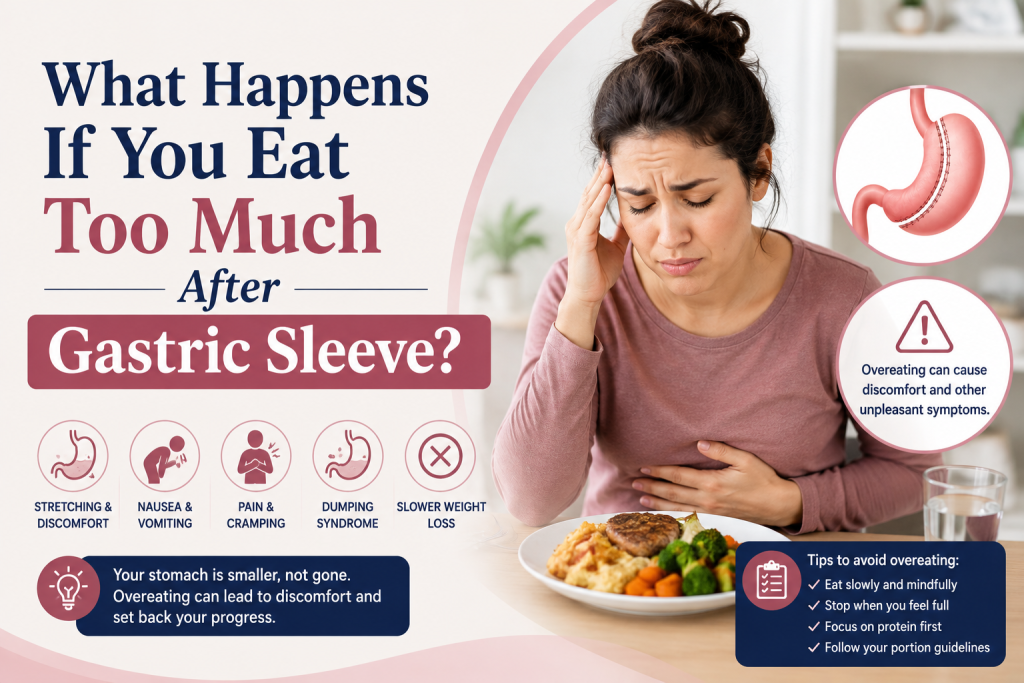
Eating beyond your new stomach’s comfortable capacity can create pressure, pain, nausea or vomiting. You may also experience:
- Tightness in your upper abdomen or chest
- Acid reflux or regurgitation
- Bloating or repeated burping
- Hiccups or increased saliva
- A sensation that food is stuck
- Sudden fatigue or discomfort after eating
According to University College London Hospitals, vomiting after sleeve surgery can be a result of the following factors: eating too fast, drinking liquids near a meal, chewing food very little, and eating too much.
What Should You Do Immediately?
Stop eating when you are feeling pressure, pain or full. Try not to “stuff” the food down by drinking a lot at once, as extra fluid can overfill the stomach and make vomiting worse than normal.
Sit up straight, slowly walk around if comfortable and allow your tummy to settle. After dealing with the pain, you should go back to eating the level of foods and food sizes your bariatric team recommends.
For future meals:
- Use a small plate
- Take thumbnail-sized bites
- Chew each bite thoroughly
- Allow 20–30 minutes for the meal
- Stop when comfortably satisfied, not completely full
- Keep drinks separate from meals
This will help to minimize discomfort and facilitate the passing of food through the sleeve.
Can Overeating Stretch Your Gastric Sleeve?
A single too-large meal isn’t a sign that one’s sleeve is permanently stretched. Repeatedly ignoring fullness signs, however, can eventually alter the amounts a person can tolerate and affect the weight loss outcomes.
Among potential causes of weight regain following sleeve gastrectomy, UCLA Health points to larger portions, frequent sweet consumption, emotional eating and increased stomach volume.
Read more: Can Your Stomach Stretch Again After Gastric Sleeve?
When Should You Contact Your Surgeon?
If vomiting is uncontrolled, worsening abdominal pain, or if swallowing is also difficult or unable to keep fluids down, get medical advice. When vomiting persists longer than 24 hours, UCSF recommends calling the bariatric team, as this can lead to dehydration.
Please be aware that there is a possibility of dietary stages and amount of food intake being different in case of patients, and it is recommended to follow the instructions of the discharge plan.
Read more: gastric sleeve cost by state
Final Statement
So, what happens if you eat too much after gastric sleeve surgery? Typically, you will feel pressure, pain, nausea or vomit. Don’t ignore these symptoms as a reason to continue eating, they are a warning sign to stop.
The slow pace and tiny pieces along with stopping when you’re full help you look after your comfort and prevail in long-term weight management.
Read about the best gastric balloon Turkey here!
Frequently Asked Questions
1. What happens if you eat too much after gastric sleeve surgery?
Eating too much after gastric sleeve surgery can cause stomach pain, nausea, vomiting, bloating, or discomfort because the stomach is much smaller after the procedure.
2. Can overeating damage your gastric sleeve?
Occasional overeating is unlikely to damage the sleeve, but repeatedly eating large portions may stretch the stomach over time and affect long-term weight loss results.
3. How do you know if you’ve eaten too much after gastric sleeve surgery?
Common signs include feeling overly full, chest pressure, nausea, vomiting, hiccups, stomach pain, or acid reflux shortly after eating.
4. What should you do if you overeat after gastric sleeve surgery?
Stop eating immediately, avoid lying down, sip water later if advised by your healthcare provider, and return to smaller, slower meals to prevent future discomfort.
5. How can you avoid overeating after gastric sleeve surgery?
Eat slowly, measure your portions, chew food thoroughly, avoid distractions while eating, and stop as soon as you feel comfortably full.