

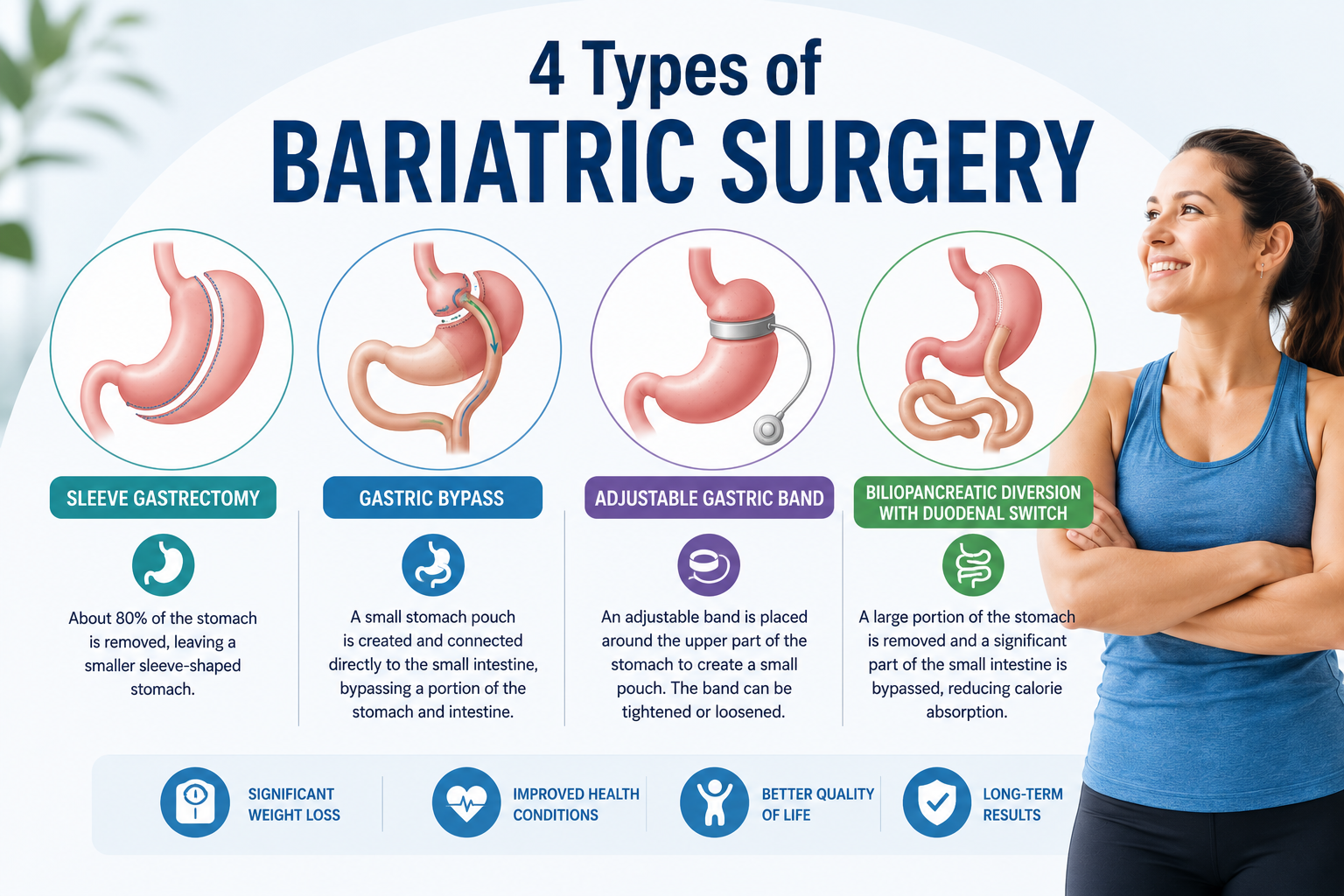
Weight-loss surgery has changed dramatically over the last decade. Today, bariatric surgery is more tailored, more effective and safer than ever before. But this doesn’t detract from the fact that many people seeking information on treatment will continue to ask themselves, what are the 4 types of bariatric surgery?
Understanding the differences of these methods could help you in decision making regarding weight management in the long run and health care. Here we will explain the mechanics of each surgery performed, who they are for and what the average patient might reasonably expect to see after the surgery.
When considering where to go for treatment, it is common for people to look around the world for bariatric surgery turkey safety to compare standards.
4 Types of Bariatric Surgery
Gastric Sleeve Surgery (Sleeve Gastrectomy)
Gastric sleeve surgery has become the most popular bariatric surgery in the world.
In Surgery, approximately 75 to 80% of the stomach is removed and a narrow sleeve shaped pouch remains. This smaller stomach will allow for a quicker sense of fullness for patients as well as significantly lower levels of hunger hormones.
Why It’s Popular
- Significant long-term weight loss
- Shorter surgery time
- No intestinal rerouting
- Lower complication rates compared to older procedures
Many patients opt for the sleeve gastrectomy because it has a good compromise of effectiveness and simplicity of recovery.
Gastric Bypass Surgery
Gastric bypass is a bariatric surgery that has been around the longest and studied the most.
A surgeon makes a small pouch in the stomach and reroutes a section of the intestine. This will also cause a reduction in calorie breakdown as well as the consumption of food.
Best For
- Severe obesity
- Type 2 diabetes management
- Patients with acid reflux
Highly effective, bypass surgery does, however, need lifelong vitamin supplementation and dietary control.
Many clinics have advanced bariatric surgery in Turkey, which is why they are considered for bariatric surgery in Turkey.
Adjustable Gastric Band
Adjustable gastric banding involves putting an adjustable silicone band around the top of the stomach to make it smaller.
In any of these surgical procedures, no portion of the stomach is to be removed.
Pros
- Adjustable and reversible
- Shorter recovery time
- Lower initial surgical risk
Cons
- Slower weight loss
- Higher long-term revision rates
- Less common today
Weight loss surgery using gastric bands is less commonly performed than sleeve and bypass surgery, possibly due to mixed results, and as working implants, they require maintenance. Gastric bands are not as common as a sleeve or bypass because they have mixed long-term results, and they are working implants that must be maintained.
Duodenal Switch Surgery
The duodenal switch is a similar procedure to a gastrointestinal bypass that adds elements of the gastric sleeve procedure.
A strong weight loss technique, usually used in a person with severe obesity or severe metabolic problems.
Key Benefits
- Highest average weight loss
- Strong diabetes improvement
- Effective for high BMI patients
Important Considerations
- Higher nutritional deficiency risk
- More complex aftercare
- Requires close medical monitoring
How Doctors Decide Which Surgery Is Best
There is no single “best” procedure for all persons. There are various things surgeons consider before suggesting a treatment.
These include:
- BMI and weight history
- Eating habits
- Existing health conditions
- Previous abdominal surgeries
- Lifestyle and long-term goals
Although a patient may start with doing a search on bariatric surgery near me, getting the best surgeon and support team matters more than that.
What About Cost and Eligibility?
The total bariatric surgery cost will depend on the type of surgery performed, type of hospital facility, the experience of bariatric surgeon and the geographical location.
It’s also important for patients to know the typical procedures and bariatric surgery requirements, such as:
- A BMI over 35 with health conditions
- A BMI over 40 without complications
- Failed long-term weight-loss attempts
- Psychological and nutritional evaluations
When people search for a procedure, such as gastric bypass turkey cost, they are likely to make comparisons with other countries and find this is something that people commonly do when looking for an international comparison.
Life After Bariatric Surgery
Surgery is just one step in the process. As the long-term success depends a lot on nutrition, movement and behaviour change.
Most patients experience:
- Improved mobility
- Better blood sugar control
- Reduced joint pain
- Increased energy
While dramatic physical transformations might appear in bariatric surgery before and after photos, it is the annual improvement in health and quality of life that is most significant.
Those looking into long term financial planning may reach out to compare resources such as the gastric sleeve cost by state to help them make a better informed decision.
One of the most important steps of treatment is education and follow-up, which is recommended by any healthcare provider around the world, including the expert ones such as Istanbul Sleeve.
The Final Words
When considering weight loss surgery, it’s important to understand what are the 4 types of bariatric surgery. All procedures carry with them a set of benefits/risks and effects.
The best answer will differ based on their health history, goals and how well they’ll be able to keep up with lifestyle changes post surgery. Talk to an expert bariatric surgeon and make out a safe plan that best suits you and can eventually help you achieve your desired outcome.
What is the best and safest bariatric surgery?
Gastric sleeve surgery is one of the safest and most balanced surgeries to undertake, since it’s an effective surgery and one that’s relatively less complicated.
What organ is removed in bariatric surgery?
The gastric sleeve removes a big portion of the stomach. There are other methods of rerouting intestines, without removal of organs.
How many pounds is considered bariatric?
The requirement to be eligible for bariatric surgery is not solely based on weight level, but on BMI. A lot of candidates have a weight of upwards of 100 lbs. in excess.
What is stage 3 of bariatric surgery?
Generally, stage 3 daily diet involves soft foods following surgery and is the step toward eating foods that contain a lot of protein but are softer.
 English
 Turkish