

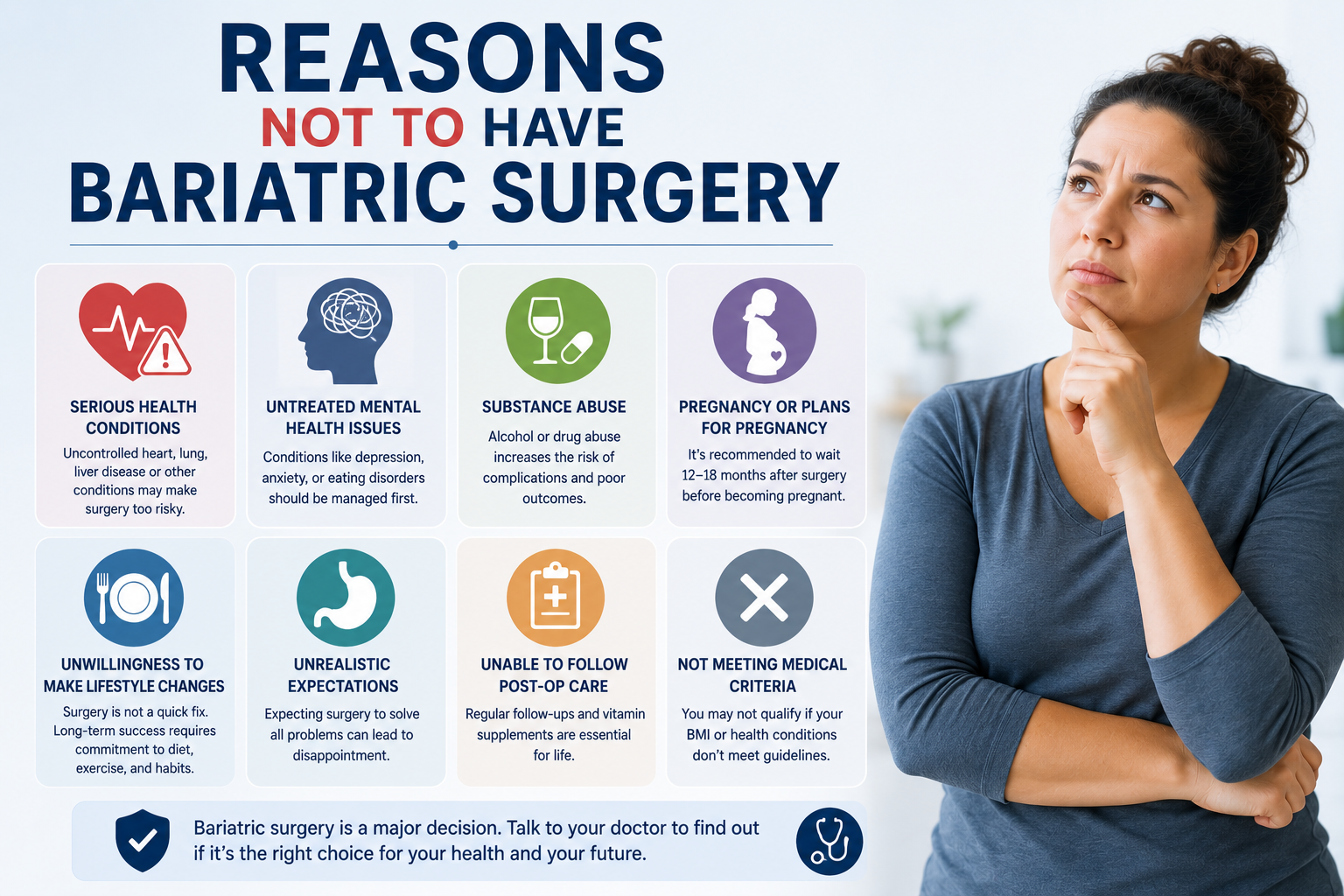
For many who are overweight and obese, the decision to have bariatric surgery seriously changes their life. Can be beneficial for diabetes, sleep apnea, mobility and quality of life. But surgery is not suitable for everyone
It is advisable to be informed about some of the most realistic and medically sound Reasons not to have bariatric surgery, as these can help you decide whether or not the surgery is suitable for your health goals and lifestyle.
When anyone considers treatments like the gastric sleeve turkey surgery options you must weigh both advantages and disadvantages.
Reasons Not to Have Bariatric Surgery
You’re Not Ready for Permanent Lifestyle Changes
While surgery may alter the digestive system, it won’t necessarily make a person’s behavior and attitudes toward food change.
Patients must agree to:
- Long-term portion control
- Exercise daily
- Vitamin supplements
- Follow-ups
- Protein diet
These habits must be in place otherwise regaining weight over time may occur.
Most people think that the weight reduction sleeve surgery methods, such as these, are shortcuts; however, in order for them to be effective, the user has to work hard past the healing period.
Nutritional Deficiencies Can Become a Long-Term Issue
Vitamin and mineral absorption is one of the most often forgotten issues.
Patients have a risk for deficiencies in:
- Iron
- Vitamin B12
- Calcium
- Vitamin D
- Folate
If not treated, these deficiencies may cause tiredness, loss of bone, thinning hair, or many other problems.
This is why lifelong nutritional monitoring is necessary following surgical procedures.
Surgery Always Carries Risks
No surgery is without risk, even with modern laparoscopic techniques.
Some of the bariatric surgery risks are:
- Infection
- Acid reflux
- Leaks in the digestive tract
- Gallstones
- Digestive discomfort
This is why it’s essential to monitor nutrition throughout one’s life after surgical procedures
Emotional Eating May Not Improve Automatically
The stress, anxiety, trauma, and emotional coping patterns for some are linked to obesity.
While surgery will help with stomach size reduction, it will not directly address:
- Over eating
- Food addiction behaviors
- Emotional triggers
- Mental health struggles
That is the reason that psychological screening is frequently necessary prior to surgery clearance.
Recovery Can Be More Challenging Than Expected
Whilst some patients return to their normal function within weeks, it takes time to recover.
Examples of common temporary problems are:
- Fatigue
- Nausea
- Difficulty tolerating certain foods
- Dehydration risk
- Low energy during rapid weight loss
When patients are looking into gastric sleeve istanbul, they should realize that follow-up care is as critical as the procedure.
Weight Loss Results Can Vary
Weight loss varies from patient to patient following surgery.
The outcome is very much influenced by:
- Diet consistency
- Activity level
- Sleep quality
- Hormonal health
- Follow-up care
In some cases, further corrective surgery, like gastrik bypass revizyon may also be necessary if complications arise or if not enough weight loss is seen.
It May Not Be Necessary for Every Person
Non-surgical options may also be successful for people who have moderate weight concerns and can incorporate:
- Nutrition counseling
- Medical weight-loss programs
- Exercise therapy
- Prescription medications
Any bariatric clinic should first assess if the surgery is appropriate for each patient, and not be performed indiscriminately.
Excess Skin Can Affect Confidence
Loose or hanging skin may occur in other areas around the body when you experience rapid weight loss, particularly:
- Arms
- Abdomen
- Thighs
- Chest
Weight loss, although positive for good health, may still be an emotionally challenging process for some patients.
Long-Term Follow-Up Is Essential
Bariatric surgery can’t be a miracle cure. Continuous service is needed for the success and health monitoring.
A lot of health care providers, including Istanbul Sleeve, remind patients of the importance of the post surgery medical consultation as well as nutritional and lifestyle counseling.
For patients engaged in research efforts pertaining to other bariatric surgery sites like Turkey, bariatric surgery turkey safety services should also be checked when conducting their research.
Final Words
There are legitimate Reasons not to have bariatric surgery, as well as many good reasons that people may have for considering it. Surgery can offer significant health benefits; however, there are to be lifelong lifestyle changes, medical follow-up and emotional preparation.
The most favorable candidates would be the ones who understand the advantages and disadvantages and the long term commitments involved. But, before you do anything else, consult with an experienced bariatric specialist and have a detailed discussion about your health situation, with the bariatric specialist being as honest as possible about his or her situation.
What does bariatric mean?
Weight loss surgery and other non-surgical procedures are referred to as “bariatric.”
What can you never do again after bariatric surgery?
To maintain long-lasting success and gut health, it is important for patients to avoid overindulgence, high-sugar snacks, fizzy beverages, and unhealthy food practices.
What are the best vitamins to take after bariatric surgery?
Multivitamins with iron, calcium, vitamin D, vitamin B12 and folate are most commonly prescribed for most patients. Depending on the type of surgery, certain supplements are used.
Do you lose weight immediately after bariatric surgery?
Many of the patients start losing weight soon after the surgery, especially with the liquid and soft food phases.


 English
 Turkish